The Story
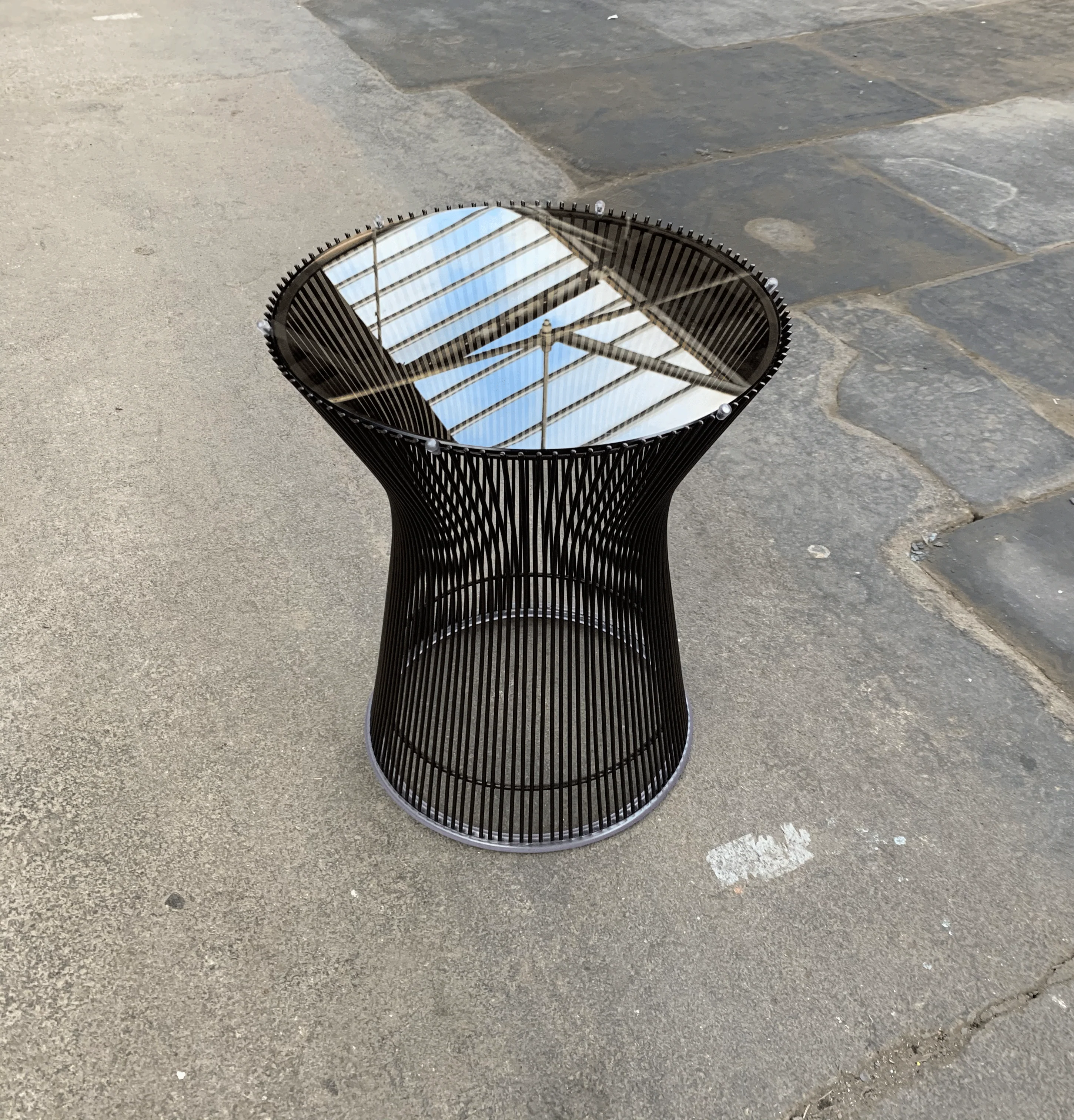
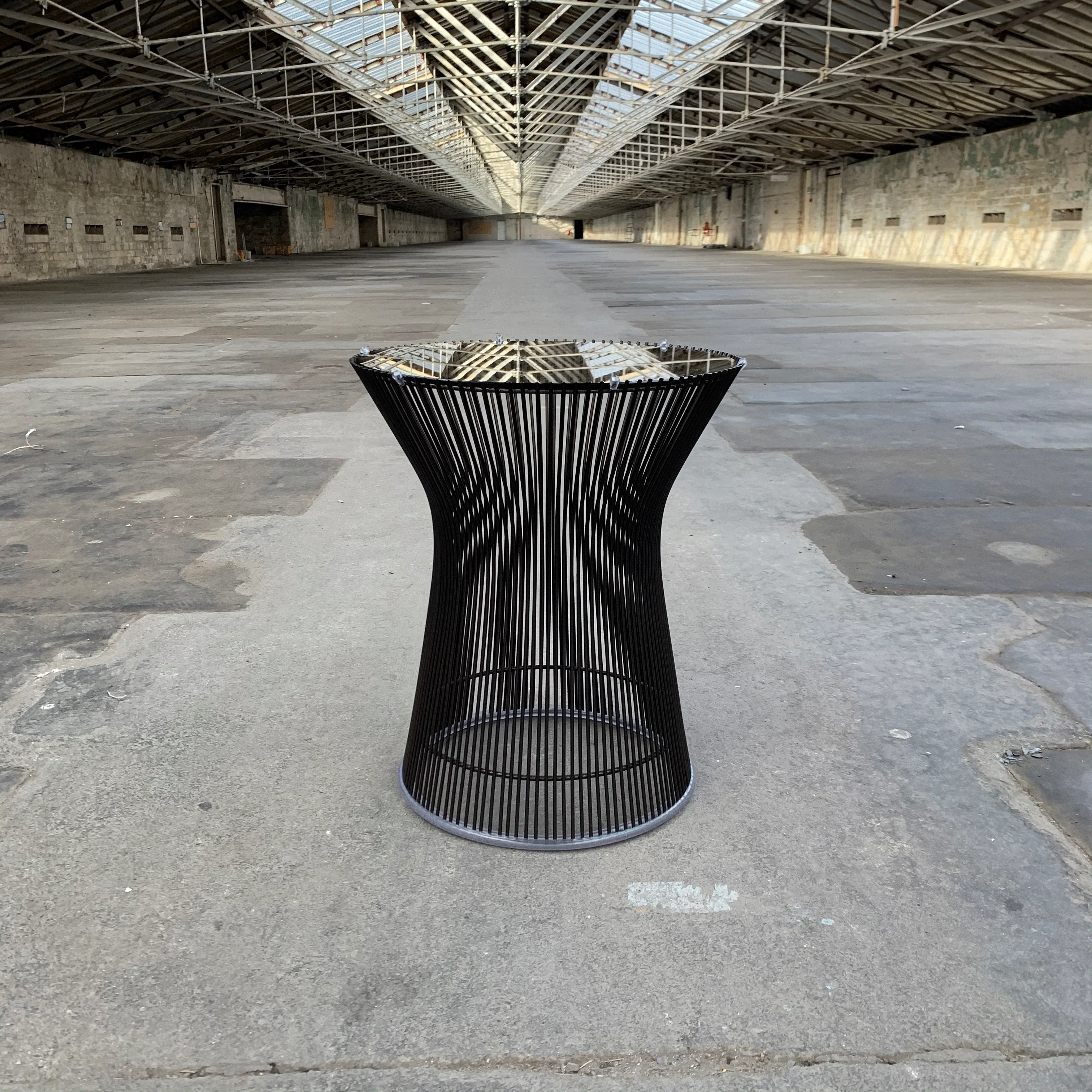
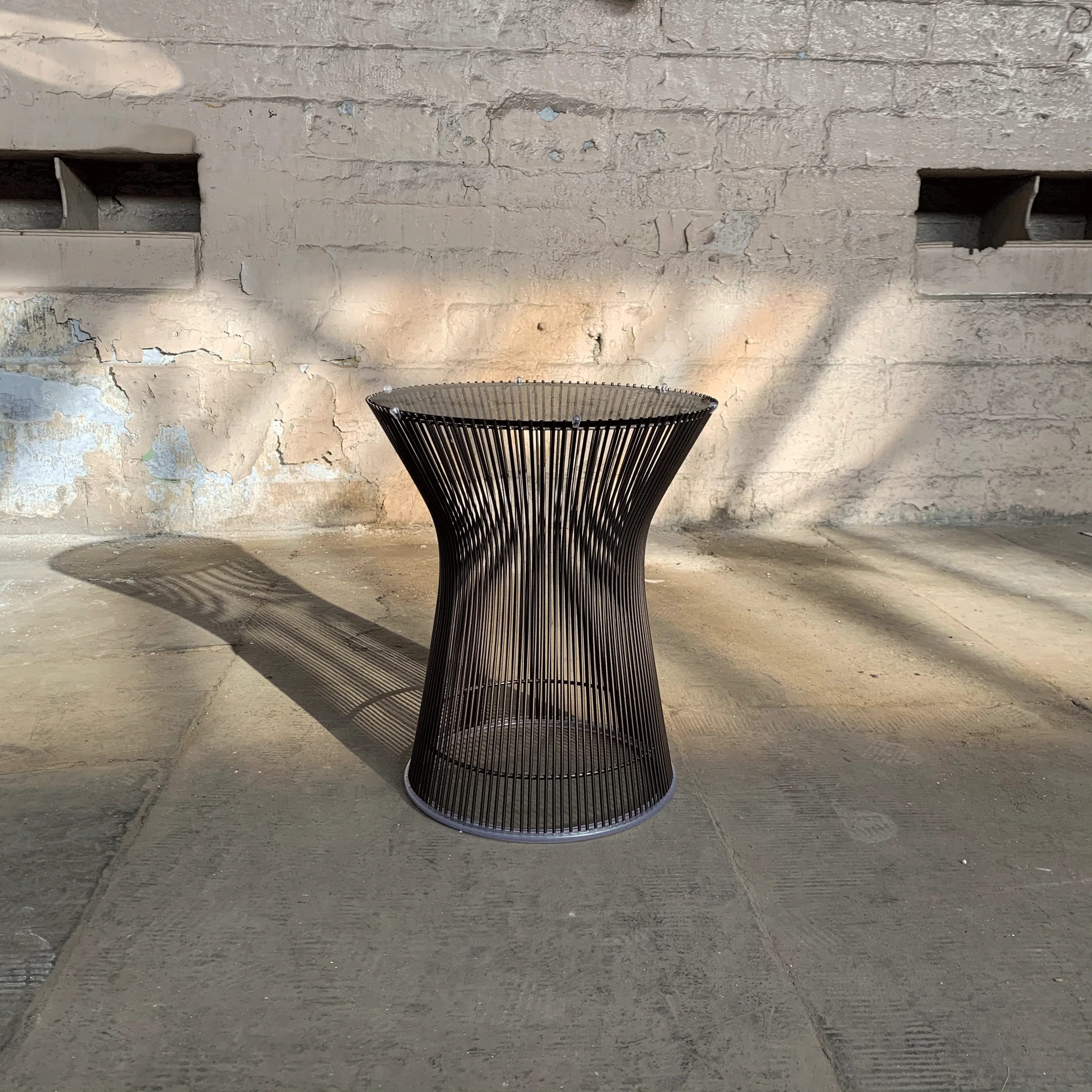
Platner side table with metallic bronze frame and bronze glass top.
This iconic side table is created by welding curved steel rods to circular frames, simultaneously serving as structure and ornament. It never fails to look stunning.
Dimensions: 46cm high, 40cm diameter.
Construction: Frame features vertical steel wire rods welded to circular horizontal and edge-framing rod. Nickel finish with clear lacquer protection or painted bronze metallic. Base features a clear plastic extrusion ring that creates a smooth bottom surface.
About Warren Platner (1919-2006)
Warren Platner studied at Cornell University, graduating in 1941 with a degree in architecture. He went on to work with legendary architects Raymond Loewy, Eero Saarinen, and I. M. Pei before opening his own architecture practice. Platner made notable architectural contributions throughout his career, including the Georg Jensen Design Center and the Windows on the World restaurant in the World Trade Center, both in New York City.
With his experience in the firm of Saarinen and Associates, it is not surprising that the mantel for the second generation of pedestal and wire furniture fell on the creative shoulders of Platner. Reflecting a dramatic shift in cultural values, modernism became more expressive in the 1960s. Platner felt there was an opportunity to merge the competing aesthetics of the time.
“I began to think about what I thought furniture... really might be, starting with the philosophy that it isn’t going to be aggressively technological, or aggressively handicraft…I, as a designer, felt there was room for the kind of decorative, gentle, graceful kind of design that appeared in period style like Louis XV, but it could have a more rational base instead of being applied decoration…I thought why separate support from the object. Just make it all one thing."
Details & Craftsmanship
Every detail has been carefully considered to bring you the perfect product.
Details & Craftsmanship
Every detail has been carefully considered to bring you the perfect product.
Description
Platner side table with metallic bronze frame and bronze glass top.
This iconic side table is created by welding curved steel rods to circular frames, simultaneously serving as structure and ornament. It never fails to look stunning.
Dimensions: 46cm high, 40cm diameter.
Construction: Frame features vertical steel wire rods welded to circular horizontal and edge-framing rod. Nickel finish with clear lacquer protection or painted bronze metallic. Base features a clear plastic extrusion ring that creates a smooth bottom surface.
About Warren Platner (1919-2006)
Warren Platner studied at Cornell University, graduating in 1941 with a degree in architecture. He went on to work with legendary architects Raymond Loewy, Eero Saarinen, and I. M. Pei before opening his own architecture practice. Platner made notable architectural contributions throughout his career, including the Georg Jensen Design Center and the Windows on the World restaurant in the World Trade Center, both in New York City.
With his experience in the firm of Saarinen and Associates, it is not surprising that the mantel for the second generation of pedestal and wire furniture fell on the creative shoulders of Platner. Reflecting a dramatic shift in cultural values, modernism became more expressive in the 1960s. Platner felt there was an opportunity to merge the competing aesthetics of the time.
“I began to think about what I thought furniture... really might be, starting with the philosophy that it isn’t going to be aggressively technological, or aggressively handicraft…I, as a designer, felt there was room for the kind of decorative, gentle, graceful kind of design that appeared in period style like Louis XV, but it could have a more rational base instead of being applied decoration…I thought why separate support from the object. Just make it all one thing."